Prof. Abbas Shouman: The courtyard of al-Azhar Mosque stands as a witness to the defeat of all campaigns that have targeted Egypt and the Islamic world
Prof. Abbas Shouman: The October Victory is a Human Miracle Unprecedented in Military History
Prof. Abbas Shouman: Belief in Allah, national unity, and standing behind the leadership are the main reasons for the October Victories
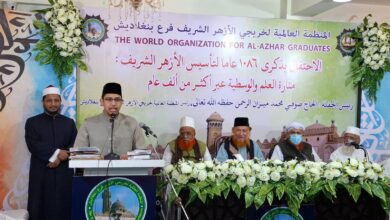
His Eminence Prof. Abbas Shouman, Secretary General of the Council of Senior Scholars at al-Azhar and President of the World Organization for al-Azhar Graduates delivered a speech during the celebration of the glorious October victories. In his address, he stated that the courtyard of al-Azhar Mosque has borne witness to the defeat of all campaigns that targeted Egypt and the Islamic world. He further remarked that our enemies are well aware that subjugating Egypt would mean controlling the entire Islamic world. This was evident in the repeated failures of the English, the French, the Zionists, and other tyrannical forces, all of whom faced fierce resistance from the people Egypt al- Azhar.
During his speech after the Maghrib prayer at Al-Azhar Mosque, Prof. Abbas Shouman reflected on his memories of October 6, 1973. As a young child at the time, he did not fully comprehend the impact of the 1967 defeat. However, after the war began, he noticed a dramatic shift in emotions, as the feelings of hurt and sadness faded, replaced by joy and pride. His Eminence recalled watching groups of people gather around small radios, listening to military statements that reassured them of the armed forces’ success. He remarked that, initially, there was not full belief in these statements due to past painful experiences, but over time, joy and cheer returned to the previously sorrowful faces.
Additionally, His Eminence stated that hopes were renewed with every military statement announcing the progress of the Egyptian forces, reflecting the unity of the Egyptian people in standing behind their leadership in the face of challenges. These historical moments reflect the strength of the Egyptian people and their determination to reclaim their dignity and lands. This is evident in the stance of al-Azhar, which remains a symbol of pride and dignity in the face of all forms of aggression.
Prof. Abbas Shouman notably discussed the factors contributing to the victory on October 6. He spoke about the emotions of the Egyptian people during the war, describing how their feelings evolved from doubt to confidence in the success of the armed forces. He explained that, initially, the situation on the front was quite different from what was being reported, and people did not fully grasp the reality of events on the front lines. However, as foreign radio channels began confirming the events, it became clear that the broadcasts were accurate. This led to widespread cheers, and people started seeking places to donate blood for the heroes on the front lines.
Furthermore, Prof. Abbas Shouman emphasized that one of the most important reasons for victory was the soldiers’ belief in Allah and their trust in Him. They were confident that whoever places their trust in Allah will find Him sufficient. This faith was reflected in the spirit of the soldiers, who were fighting for a just cause. Certainly, we were not the aggressors; rather, we were defending ourselves against aggression and seeking to reclaim the land that had been stolen by the enemy. He emphasized the importance of exerting efforts, clarifying that reliance on Allah does not excuse us from exerting effort and thorough preparation. We have been commanded to strengthen ourselves, and in this spirit, we have done all we can, following Allah’s guidance by preparing to the best of our ability.
Moreover, Prof. Abbas Shouman spoke about the human miracle that occurred after the great defeat in 1967, where the Egyptian army was able to recover within a short period, and began the processes of attrition that contributed to raising morale and fighting capacity, and how the Egyptian army, despite its great defeat and the loss of its aircraft, cannons and morale, was able to regain its strength within a few years, which is strange in military history. History has proven that the Egyptian people can overcome challenges and regain their rights thanks to their faith and determination.
His Eminence emphasized the importance of remembering the October victories as a testament to the strength of the Egyptian will and unwavering faith in Allah. This legacy serves as a guiding example for future generations to continue facing challenges with the same resolve. He referred to President Sadat’s decision to dismiss foreign experts before the October War, ensuring that the war would be fought entirely by Egyptian hands and expertise, relying on the will and bravery of the Egyptian people. Our armed forces, through the grace of Allah and the determination of the soldiers, achieved remarkable victories over the enemy—victories that neither the most advanced experts nor the most powerful weapons could secure. This stands as proof of the strength of the Egyptian will and its ability to overcome obstacles. He also praised the Egyptian soldiers for their deep belief in their cause and their unwavering loyalty to their homeland.
It is worth mentioning that His Eminence emphasized how this experience reflects the spirit of pride and dignity embodied by the Egyptian people and reaffirms the importance of faith in achieving victory, whether in war or any other field. One of the most critical factors in the success of the October War was the solidarity of the Egyptian people across all sectors—men, women, youth, children, and the elderly. This unity enabled the nation to rally behind the political and military leadership and endure all challenges to ensure the war’s success. The people were willing to make sacrifices, including enduring food shortages, to strengthen the internal front.
He pointed out that the collective thinking among young men, women, and men on how to support the soldiers was one of the reasons for the victory, along with the careful planning by the political and military leadership in choosing the right time to start the war and employing innovative, unprecedented strategies. He also referred to the idea of penetrating the Bar Lev Line, which was considered an invincible fortress, as the Egyptian army used water cannons to penetrate it after the enemy army said that this fortress would not be penetrated even by atomic bombs, in a sign of creativity in the face of challenges.
At the end of his speech, Prof. Abbas Shouman emphasized the importance of the national unity between Muslims and Christians, noting that there was no discrimination between them in the face of the enemy. The victory was achieved with help from Allah, despite the cease of human assistance. He underscored the necessity of strengthening solidarity and unity among Egyptians, especially in light of ongoing threats. He praised the political and military leaders for their vigilance in continuing to arm the army, even during peace treaties, out of concern and preparation for potential threats or treachery from adversaries. Likewise, he affirmed that what happened in 1967 will not happen again. Additionally, he stressed the importance of reminding new generations of the events of the sixth of October, ensuring they always remember the victory of October, its causes, and its circumstances.
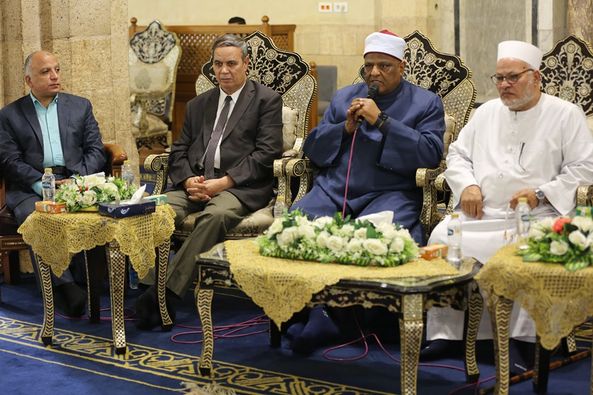
On Monday evening, following the Maghrib prayer, al-Azhar Mosque held a ceremony under the patronage of His Eminence the Grand Imam, Prof. Ahmad at-Tayeb, Sheikh of al-Azhar ash-Sharif, entitled “Factors of Victory” to celebrate the anniversary of the glorious October Victories. The event featured the participation of His Eminence Prof. Abbas Shouman, Secretary General of the Council of Senior Scholars and President of the Board of Directors of the World Organization for al-Azhar Graduates, Prof. Ibrahim al-Hudhud, WAAG’s Academic Advisor and Member of the Islamic Research Academy, Prof. Abdul Moneim Fouad, General Supervisor of Academic Activities at al-Azhar Mosque, Prof. Hani Odah, Director General of al-Azhar Mosque, along with a group of al-Azhar scholars and students.