
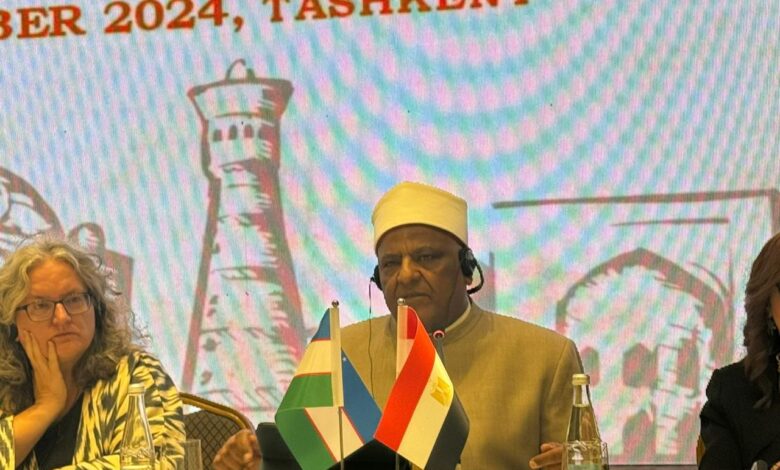
Shouman: Guardianship is a Responsibility and Duty Assigned to Men Towards Their Wives, and It Has Nothing to Do with Superiority or Preference
Prof. Abbas Shouman, Secretary-General of al-Azhar Council of Senior Scholars and President of the World Organization for al-Azhar Graduates, stated that it is well-known among Muslim men and women that our Shariah places great emphasis on the family. This emphasis begins with the consideration of marriage and the formation of a new family. Islam advises young men to choose a woman who adheres to her religious teachings in her behavior and guides women’s guardians to accept a young man committed to his faith as a suitable husband for their daughter. Shariah supports the engaged couple step by step, from betrothal to the marriage contract and through married life, which may sometimes bring happiness and at other times tension. It sets boundaries to help them overcome challenges and foster the affection desired from marriage. Therefore, the last recommendation of our noble Prophet was to treat women with kindness.
During the roundtable organized by the UNFPA office in Uzbekistan titled “Women’s Rights in Islam,” along with a workshop on “Promoting Women’s Rights in Uzbekistan,” the President of the World Organization for al-Azhar Graduates emphasized that if we are here today at this table, and at subsequent events, working to promote women’s rights in all societies—not just in Uzbekistan—the best approach to justice for women is to highlight the rights that our Shariah has granted them, without reduction or excess. Many people infringe on women’s rights to family coexistence, treating women as if their role is limited to serving their husbands and children, with no opportunity to enjoy the rights afforded to men. This is a clear injustice to women, which our exalted Shariah firmly rejects. Our Shariah views women as equal partners to men, sharing responsibilities and enjoying the same rights as men in exchange for the duties they fulfill.
The Secretary-General of the Council of Senior Scholars at al-Azhar emphasized the need to correct misconceptions about the social status of women. Many people misunderstand the concept of guardianship, wrongly assuming that it implies men’s superiority over women, placing the husband in a higher rank than the wife. This perception is incorrect. Guardianship is a responsibility and duty assigned to men towards their wives and has nothing to do with preference or rank. A man’s guardianship means he is responsible for providing financial support, protection, and upholding the dignity of his wife. A brief look at linguistic dictionaries confirms this meaning: the guardian of something is the one responsible for it. It is not only the husband who is responsible for the affairs of women; Islam honors women throughout their lives. From birth to the end of their lives, women are under the care of men: Before marriage, they are under the care of their families; after marriage, they are under the responsibility of their husbands; and if they divorce or are widowed, they return to the care of their fathers or another male guardian.
Prof. Shouman emphasized that if we truly wish to do justice to women, we must take a balanced approach when addressing their issues. While undervaluing their rights is clearly rejected by our Shariah, excessively pursuing gains for women can also inadvertently harm them in ways that may go unnoticed by those advocating for their fairness. It is not in the best interest of women to demand they abandon their modesty or question the obligation of the veil, which serves to honor and protect women from vulgarity, like a precious jewel shielded from reckless eyes. The veil is not meant to restrict women, as some men and women mistakenly believe, but rather is affirmed by clear and definitive texts, foremost among them the Book of Allah.
Shouman further stated that it is not in the best interest of women to endorse same-sex marriage or to permit what is known as cohabitation before marriage, both of which are explicitly prohibited by our Shariah. Additionally, it is not beneficial for women to demand equality with men in inheritance, as this could result in the loss of many financial rights that are rightfully theirs. In many inheritance cases, women receive a greater share than men, and in others, they are equal. True fairness lies in upholding the rights that our Shariah has established without independent reasoning, as these definitive rulings are clearly outlined in the Book of Allah.
The Organization’s President added that it is not in the interest of the Muslim woman to enable her to marry a non-Muslim, as the marital life will askew since his religion will not urge him to let her practice her worshiping freely; hence, a dispute between the spouses may occur. On the other side, the marriage of a Muslim man and a non-Muslim woman will not face such obstacles, since the husband believes in both Moses and Jesus on equal levels. Additionally, Islam commands a Muslim man to respect his wife’s religion and give her enough space to practice her worshiping, besides, he is forbidden from abusing her religion or even exaggerating in commending Islam that is to avoid any luring of the wife to convert to Islam, unwillingly. In such cases, disputes will not occur, and marital life will run smoothly; thus, the call for Muslim women’s equality with non-Muslim ones in marriage means to heighten the tensions in family relations, a matter that is unacceptable by our Islamic laws.
The Secretary General of al-Azhar Council of Senior Scholars highlighted that some downsides and damages could impact Muslim women due to the calls of violating the Islamic Shariah. In that context, His Eminence explained that a fully feminine woman is prohibited from practicing transgenderism and to turn into a male; this is considered as a deformation of Allah’s creation. Additionally, Shouman stressed that the unconditional permissibility of abortion is not in favor of women; this will encourage young ladies to give up the ethical disciplines and fall into sin due to the ease of getting rid of the pregnancy if found. As such, tackling the issue of abortion must be always paired with the legal regulations, in the same manner as all women’s rights; indeed, there are no absolute rights, this is an absolute corruption that shall harm women in the first place.
In the same vein, Prof. Shouman stressed that al-Azhar ash-Sharif strongly believes in women’s rights as stipulated in our esteemed Islamic Shariah; hence, al-Azhar, explicitly, empowers women as they share men in all work positions at al-Azhar institution. As a matter of fact, al-Azhar University has several female deans for its faculties, and one of them has assumed the position of the Grand Imam’s Consultant, one of the highest leadership positions at al-Azhar. He added that al-Azhar, in all its conferences, seminars, and different activities, always underscores the rights of women, including the right to education, work, taking over supreme governmental positions, the right of choosing her potential husband without suppression or rejection by her male guardian, the right of traveling without Muhram (a guardian) if it is safe for her, the right of divorce even though the husband has no flaws, and the right of divorce if the husband mistreats her. Besides, al-Azhar ash-Sharif emphasizes the prohibition of divorcing a woman without a sufficient reason that makes living with her impossible. Indeed, in Islam, divorcing is not an absolute right for men to practice it whenever they want. In fact, it is unimaginable that our esteemed Shariah would allow a man to divorce his wife, who sacrificed her youth for him, for the sake of enjoying his time with other wives.
His Eminence concluded his words by highlighting al-Azhar’s strong emphasis on the necessity of giving women their due inheritance rights in the wealth of their deceased husbands or relatives. He stressed as well that a woman has the right to be granted compensation, equal to her efforts, for growing her husband’s wealth. Compensation if not granted during the husband’s lifetime, then, it should be taken from his wealth after his death, and before distributing the inheritance. Without a doubt, women have been granted so many rights in Islam, and our duty is to affirm them and to urge people to give them their rights, respect, appreciate, and honor them if we actually want to be just to them.